

 The device of arms of the State flag was adopted in 1778 and the present flag is a modern version of a Revolutionary War flag. It is dark blue with the State Coat of Arms in the center. The Coat of Arms shows Liberty and Justice standing either side of a shield upon which is emblazoned the sun rising behind a range of mountains. A three-masted, square rigged ship and a Hudson River sloop signify commerce. Beneath the shield is the State motto. The original is at The Albany Institute of History and Art.
 State Facts at a Glance:
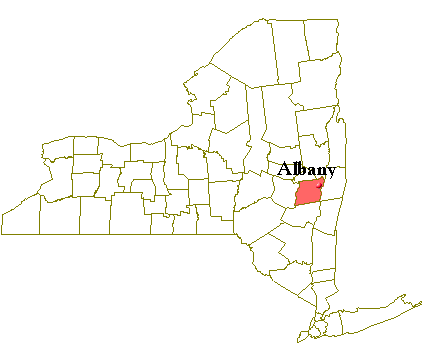
When we usually think of New York State, images of the bustle of New York City and the surrounding suburbs flash vividly in our minds. However those images are usually all that come to mind. New York City is a wonderful area, but New York State has so much more to offer. I'm here to tell you about the area where I grew up; The Capital District.
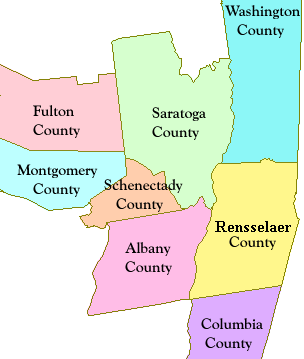
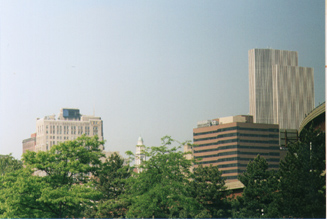
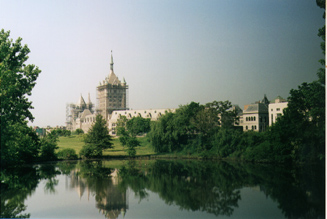
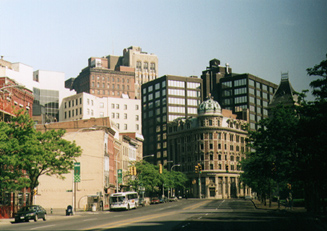
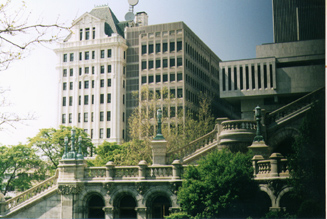
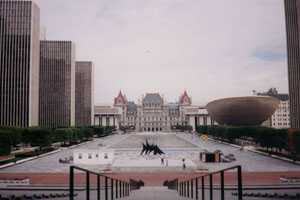
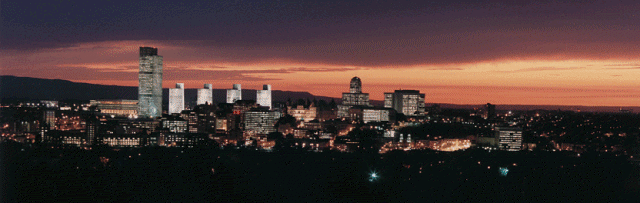
��The Capital District lies along the Hudson River in Upstate New York. Three major cities dominate the landscape: Albany, Schenectady, and Troy. As the name implies, the Capital District is the seat of government in New York. Albany has been New Yorks' capital since 1797 and has prospered ever since as a crossroads.
��The first recorded exploration of the area was in 1609 by Henry Hudson in his small ship called the Half Moon. In 1621, the Capital District known then as Fort Orange became a trading post in the colony of New Netherland established by the Dutch. It became the possession of the English in 1668 when it was captured and remaned Albany in the honor of the Duke of Albany.
��During the American Revolution, the Capital District was the target for a British invasion from Canada. In 1777, with time and terrain on the American side, British forces were worn down during the Battles of Saratoga until they were outnumbered, surrounded, and unable to secure relief. The success at Saratoga marked the turning point of the war, motivating French assistance
��During the 1820's, the Capital District became both a gateway to the North and to the West. In 1823, the Champlain Canal was completed connecting Lake Champlain (Vermont, Canada and the St. Lawrence River) and the Hudson River (New York City). In 1825, the Erie Canal was completed connecting the Great Lakes (Buffalo) and the Hudson River. The Capital District was truly the crossroads to the Northeast.
��With the development of railroads and the interstate highway systems (I87 and I90), the Capital District remains a gateway. The canals still remain open today and are popular with pleasure craft.